Baptism

Baptism ... So What? (By Thomas Hill)

Yesterday I completed a four-sermon series on understanding baptism. (You can listen here).

When it comes to practicing baptism with joyful care, I fear we might roll our eyes with a “so what?” attitude. After all, baptism is not necessary for salvation, so why give it attention? Churches and believers vary in their view of baptism, so why wade into the waters of controversy? The answer is: Because baptism is important.

The potential for controversy is not an adequate reason to evade conviction and care about Jesus’ commands. Jesus has commissioned his church with this mandate: “Go therefore and make disciples of all nations, baptizing them in the name of the Father and of the Son and of the Holy Spirit” (Matt 28:19). He has also defined love: “If you love me you will keep my commandments” (John 14:15). Jesus has commissioned his church to represent him and exercise the keys of the kingdom—baptism & Lord's Supper—recognizing what the Lord in heaven has bound and loosed (Matt 16:18-19; 18:17-18). Therefore, we glorify the Lord when we practice baptism with biblical wisdom. Here are four reasons why:

1. Though the ordinances do not regenerate, they reveal WHO God’s people are. Jonathan Leeman explains that a local church is created when a group of Christians gathers, someone explains the gospel, everyone agrees to it, and they mutually affirm one another’s agreement through the ordinances of baptism and the Lord’s Supper. These ordinances show us where a church is, and a church shows us where the Christians are.[1]

2. Alongside faithful preaching of the Bible, the ordinances keep the gospel of Jesus front and center in the church. Baptism and Lord's Supper promote the WHAT of the gospel. Bobby Jamison highlights that baptism and the Lord’s Supper are what knit a church together. They make the church visible, they tell us where the church is, and how we can join. Baptism and the Lord’s Supper inscribe the gospel into the very shape and structure of the church.[2]

3. The ordinances mark the line between the church and the world.

The ordinances remove any fuzzy line between who's inside and who's outside the church. Like lines on a playing field allow a football game to be played, so too the ordinances make evangelism and missions possible. Apart from faith in Jesus Christ, a person stands outside the circle of Christ. The good news is that the line between the world and the church is dotted, like a road lane division! Anyone who receives the grace of God responding in repentance and faith crosses over into the church. Therefore, when practiced joyfully and carefully, the ordinances can be an antidote to cultural Christianity. It may feel awkward at times to draw a line between the world and the church, but such a distinction is vital. Baptism gives new believers a clear path of response to the gospel and entrance into the church.

4. Baptism and the Lord’s Supper remain biblical ways we provide encouragement and assurance to one another. The assurance of salvation is important for every believer, but can, at times, be hard for sinners like us to receive. The ordinances provide a way to know and be known by a local church family. A church family affirms a believer’s initial profession of faith in baptism and ongoing profession in the Lord’s Supper. These ordinances are like road signs to tell you you're going the right direction as we march together toward glory. These ordinances are ongoing assurances that we see in YOU the marks of someone who is genuinely born again!

These four reasons help us to see why the Lord is glorified by our church’s joyful and careful practice of believer’s baptism. By God’s grace and for his glory, let’s make disciples among all nations, unapologetically baptizing them.

For His Glory,

Pastor Thomas

[1] Leeman, Baptist Foundations, 3-4.

[2] Quoted in Leeman, Don’t Fire Your Church Members, 82.

Encouragement to Parents about the Baptism of Children (By Thomas Hill)

Encouragement to Parents about the Baptism of Children
In the last point of yesterday's sermon, I shared some encouragement and guidance for parents as they shepherd their children toward baptism. In case you missed it, I want to post it here:


It is common for the children of believers who grow up actively involved in the church to profess faith in Jesus at an early age. This response to the gospel is wonderful! Do not discourage children from receiving Jesus and expressing their faith in him. The Lord can save a child at any age. We unashamedly want to see children saved at a young age.


However, when it comes to whether a child is ready for baptism, we should look for some specific markers of maturity. In baptism, a believer should make a credible, mature, responsible profession of faith. Young children love the Lord with their hearts easily. As they grow, they come to cognitively grasp the gospel and its significance. As they mature into their teen years, they learn that trusting and obeying Jesus can be challenging, and they must count the cost and continue to volitionally embrace him. A credible profession of faith involves all three of these: the heart, the mind, and the will.


We desire to see a child make a credible profession of faith that our elders and church members can witness. For these reasons, typically, children are teens before we see this level of baptismal maturity.


Parents, the evangelism and discipleship of your children are among the most important roles you have! Remember the refrain, “time will tell.” As your child grows, you will observe their spiritual development. Hold forth the gospel and teach your children to love and obey Jesus by faith. Teach them that faith saves, not baptism. Look for signs of regeneration and the work of the Spirit in their attitudes and behaviors. Point them to baptism, teaching them what it is—the time for the church and elders hear a mature, credible profession. Teach them about the blessing and goodness of a church that loves them by confirming their profession and giving them assurance that they appear to be in Christ.


Baptism is not about being “old enough” or reaching an arbitrary age. It is about the new birth and the maturity to personally own walking as a disciple of Jesus.


For His Glory,


Pastor Thomas

Preparing for Gathered Worship

Church Family,

We place a high priority on gathering to worship as one assembly each Lord’s Day. Being ready for this weekly celebration takes a bit of looking ahead by each of us:

1) Read over the sermon text several times. We publish sermon cards regularly, so you know the upcoming sermon plan. You might use one of these as a bookmark in your Bible.

2) Familiarize yourself with the lyrics and melodies of songs we will sing together (Google, Spotify, and YouTube are helpful tools). We publish the song list each Saturday on Crestview's social media accounts (FB, IG, Twitter).

3) Pray for the church's assembly in general and individual members by name. Use the church directory to pray for one another. Print copies are available on the resource shelf. Download the directory file from the link at the bottom of Crestview Weekly Update.

When we prepare ourselves like this, we come with anticipation, and our gathering takes on fresh significance. You are needed!

Baptism This Sunday

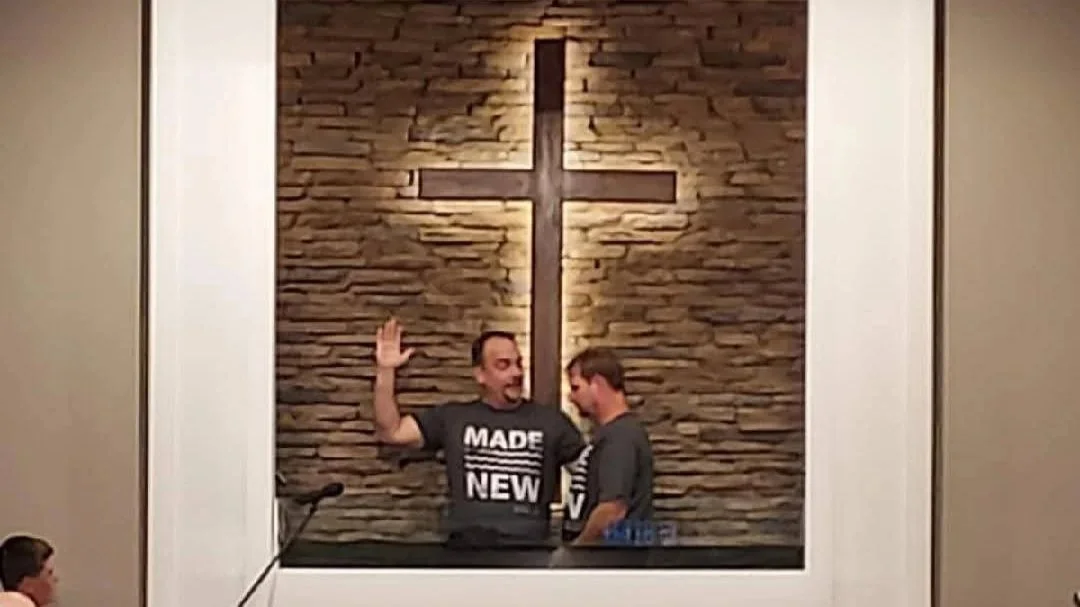
We look forward to rejoicing as Addy Butler and Cooper McLean publicly identify with the Lord this Sunday. We are always ready to baptize more! If you know someone who needs to be baptized, encourage them to speak with me.

For His Glory,

Pastor Thomas

Explaning Why Baptism is Requried for Church Membership

Go therefore and make disciples of all nations, baptizing them in the name of the Father and of the Son and of the Holy Spirit, teaching them to observe all that I have commanded you. Matthew 28:19-20

Why must someone be baptized as a believer in order to join a local church, such as Crestview? Because church membership is a public affirmation of someone’s public profession of faith in Christ. Jesus has appointed baptism as the way his followers publicly profess their faith in him. A church cannot affirm the profession of someone who has not yet made that profession. No doubt, there are many important and legitimate ways believers should be public with their faith, but baptism tops the list.  Baptism is where faith goes public.

Baptism is how you publicly identify yourself with Jesus and with his people (Acts 2:38-41). It is how you visibly signify that you are united to Christ in his death, burial, and resurrection (Romans 6:2-4) It is how you become identified before the church and the world as one who belongs to the Triune God (Matthew 28:19). It is a command of Jesus, and therefore, a matter of obedience that expresses submission to Christ’s Lordship (Matthew 28:19-20).

Baptism is how a new believer shows up on the church’s radar screen as a Christian. Baptism is like a jersey that shows you are now playing for Jesus’s team. Because of this purpose which Jesus has assigned to baptism, a church may publicly identify itself only with those who have publicly identified with Jesus in baptism.

Baptism is a wordless vow, a symbolic promise to follow Christ in the fellowship of his church. The Lord’s Supper is another wordless vow, in which you repeatedly own Christ as your Savior and his people as your people. On one level church membership is ongoing admission to the Lord’s Supper. No one can renew his vow to Christ who has not first made that vow in the form appointed by Christ. No one can be identified with the body of Christ who has not first identified with Christ and his body. Baptism necessarily precedes the Lord’s Supper like entering the front door necessarily precedes sitting down at the family meal.

What about infant baptism, or for that matter, any baptism that might have taken place prior to being converted? If baptism is where the faith of a disciple of Jesus goes public, then any baptism that took place prior to conversion, regardless of the person’s age, is not baptism. Those who have been “baptized” prior to their salvation need to be baptized – for the first time – as believers. The first baptism was not baptism at all, and a believer who has not yet been baptized needs to obey Christ’s first command in order to enter his church.

We saw a wonderful example this past Sunday. I cannot help but wonder if there may be others in a similar situation? Obedience to Christ is never wrong. It may be humbling, but it is never wrong. I also wonder if there are new believers, who have been saved recently, who need to go public with their faith? The water is in the pool. Contact me if you need to be baptized (thomas@crestviewbaptist.org).

For His Glory,

Pastor Thomas

(Article adapted from Going Public: Why Baptism is Required for Church Membership, Bobby Jamieson, B&H Publishing group, 227)