Clarifying the Connection Between Baptism & Membership (By Thomas Hill)

Baptism this Sunday

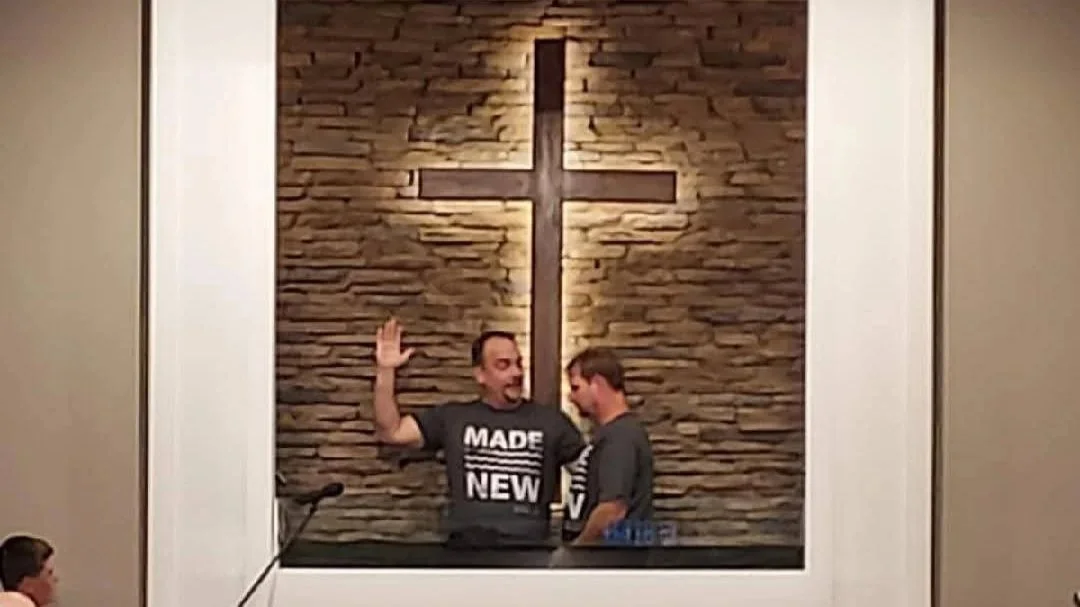
This Sunday, March 29, we plan to baptize Bobby Hohenstein. What a joy it has been to see the Lord’s grace at work in this man’s life over the last year. He is professing faith in Christ and desiring to walk as his disciple.

Our elders have witnessed Bobby’s profession of faith as he has gladly taken part in our baptism and membership process (meeting with an elder, Intro to Crestview, and a membership application). This Sunday, as a church, we will baptize Bobby and receive him as a Crestview member.

Baptism and Membership

In an effort to apply principles gleaned from the “Understanding Baptism” sermon series from this past January, I want us to be clear that when our church baptizes a believer, we are receiving them into church membership. Membership in the local church happens at baptism, not at a later members meeting. If this inclusion in membership has been unclear in the past, we hope to be clear about it in our baptisms going forward.

To provide this clarity, the elder leading the baptism will ensure that church membership is expressed in the vows made by the believer and the church during the service. If any member feels they might have reason to dissent from adding a potential baptized member, they should take the initiative to hear the believer’s testimony personally before the baptism and bring any clarifications or concerns to an elder before the day of baptism.

I suspect our church has largely understood the connection between baptism and membership, but this added clarity is beneficial for all. At least one benefit of this clarity relates to the Lord’s Supper. We should expect and encourage newly baptized members to begin eating the Lord’s Supper at their first opportunity, rather than delaying it until after the next members meeting.

Neighborhood Visits & Easter Outreach

Celebrating the saving grace of the Lord Jesus is something we enjoy doing together as a church every Lord’s Day. In our culture, Easter Sunday remains an opportunity when friends, family, and neighbors may be more receptive to an invitation to attend church with you. As they do, we pray they will experience the Lord’s presence in our welcoming, singing, praying, confessing, and preaching.

Paul highlighted how the speaking of the church as the gathered body of Christ can evangelize nonbelievers who are present: “But if all prophesy, and an unbeliever or outsider enters, he is convicted by all, he is called to account by all, the secrets of his heart are disclosed, and so, falling on his face, he will worship God and declare that God is really among you” (1 Corinthians 14:24–25). Therefore, let’s extend invitations to witness the gathered church and hear the gospel preached on Easter Sunday, April 5.

Join us this Saturday, Mar 28, 11:00 am to 12:30 pm, as we engage neighbors around our church campus with the gospel and invite them to our Easter Sunday gathering. We need as many members as possible to help this Saturday.

For His Glory,

Pastor Thomas

And Can It Be (By Cole Barnes)

And Can It Be (1738)

And Can It Be That I Should Gain was written by Charles Wesley (1707-1788), most likely soon after his conversion in May 1738. Wesley wanted to express his amazement at the beauty of God’s glorious grace. He marveled at how such grace is given to wretched sinners in regeneration and conversion.

And can it be that I should gain an interest in the Savior's blood? Died He for me, who caused His pain? For me, who Him to death pursued? Amazing love! How can it be that Thou, my God, should die for me?

In verse one, Wesley begins by exposing the profoundness of the gospel message. Can it really be that those who have rebelled against our maker, the Holy One of Israel himself, should receive an interest in his blood? Should it be that we who hung our Maker to the tree, in turn, receive the benefit of his atonement? For Wesley, as it ought to be for us, when we begin to ponder this reality, it should not take us long to answer, “It could never be!” And yet, that is the absurd reality of the gospel of our Lord Jesus. Because of his amazing love with which he loved us, even in our rebellion, our God has died for us, and so, it can be.

He left His Father's throne above, so free, so infinite His grace; Emptied Himself to show his love, and bled for Adam's helpless race; 'Tis mercy all immense and free; For O, my God, it found out me.

In verse two, Wesley turns from pondering the possibility of the gospel to Christ’s marvelous work in the incarnation and atonement. We were helpless in our sinful state, but Christ stepped down from his majesty and glory, and out of love, he emptied himself by assuming a human nature and shed his blood as our substitution. From this truth, Wesley concludes that God’s rich mercy has been generously bestowed upon undeserving sinners.

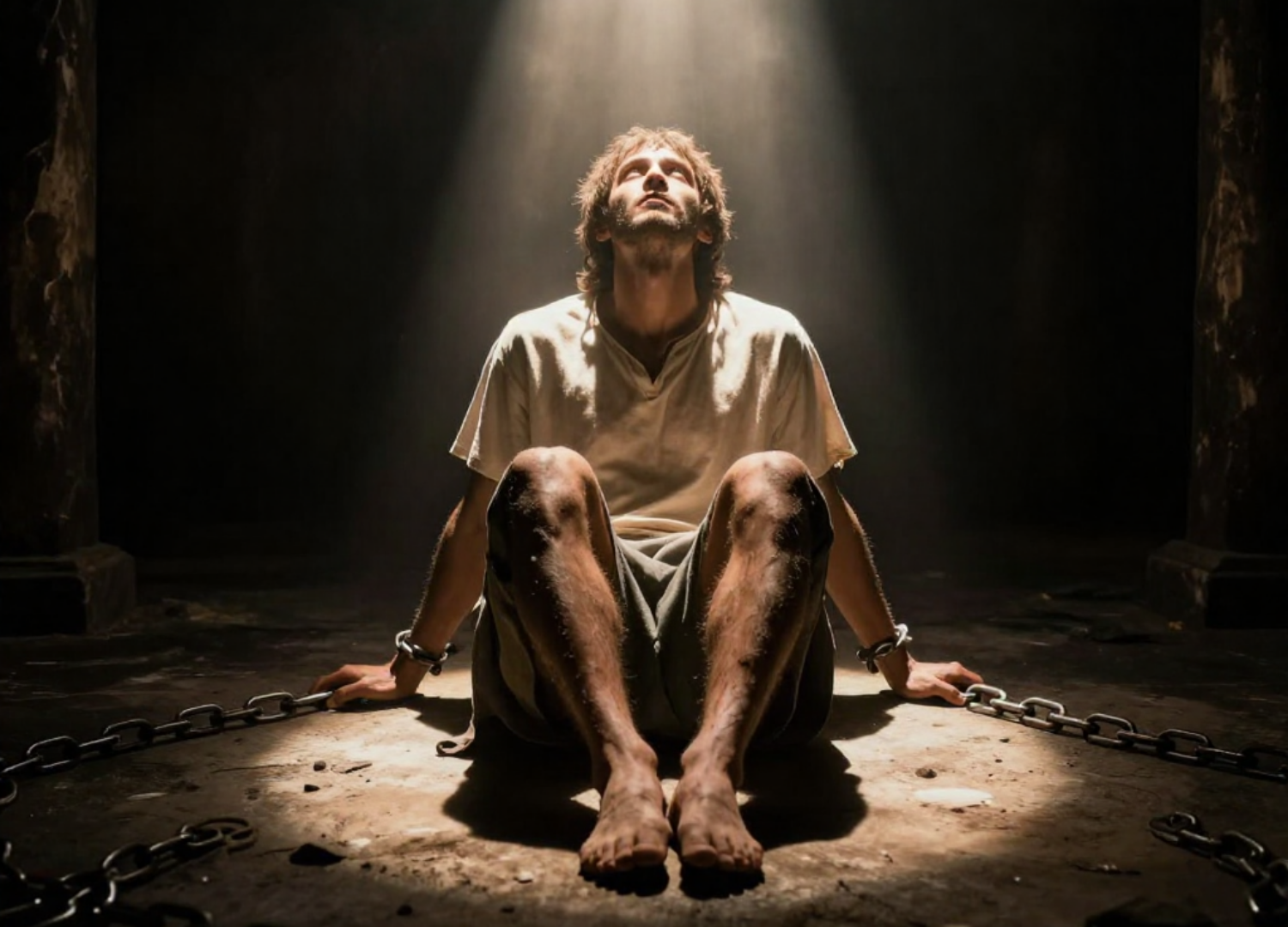
Long my imprisoned spirit lay, Fast bound in sin and nature's night; Thine eye diffused a quickening ray, I woke, the dungeon flamed with light; My chains fell off, my heart was free; I rose, went forth, and followed Thee.

In verse three, Wesley beautifully captures the reality that conversion is first God’s divine act, before it is ours. In our helpless state, we are imprisoned by our corrupted nature, which we have inherited from our first Head, Adam. This imprisonment puts our entire personalities, our desires, our minds, and our wills in bondage. But in the divine acts of regeneration and conversion, God comes to our aid. As Wesley masterfully puts it, the divine eye which shines with the light of life dispenses that life-giving light into the darkened dungeon of our sin-enslaved heart, and in that instance, we are born again, made to be new creatures in Christ Jesus. And what is the only response from the born-again man who has been enlivened by the Spirit? “My chains fell off, my heart was free; I rose, went forth, and followed Thee!” Regeneration and conversion are first an act of God dispensing his life-giving light in sinful hearts to effectually call them from their slavery. Man then, as a new creature, may freely embrace Christ in all his beauty as Lord through repentance and faith.

No condemnation now I dread; Jesus and all in Him is mine! Alive in Him, my living Head, And clothed in righteousness divine, Bold I approach th'eternal throne, And claim the crown, through Christ my own.

In verse four, Wesley now expounds on the results of Christ’s effectual atonement and the gifts of regeneration and conversion. As Paul says, “there is now no condemnation for those who are in Christ Jesus.” (Rom 8:1) We have been credited Christ’s perfect righteousness and human obedience through faith, and we have been given every spiritual blessing by virtue of our union with him. Everything that is Christ’s is ours! We have died to sin and been made alive in Him, our second Head, the last Adam. Therefore, though at one time we could not draw near to God without fear of certain death, now, because of our union with Christ, we can approach the eternal throne of the Father with boldness, not as mere servants, but as the rulers God created us to be in Eden.

Amazing love! How can it be that Thou, my God, should die for me?

Pastor Cole

Immortal, Invisible, God Only Wise (By Cole Barnes)

Immortal, Invisible, God Only Wise (1867)

Walter Chalmers Smith (1824-1908) published this great work of theological poetry for the first time in Hymns of Christ and the Christian Life (1867). Smith’s aim was to express in human language the nature and character of the inexpressible God as revealed in Holy Scripture, the one who describes himself as the great, I Am, Yahweh.

Immortal, invisible, God only wise; In light inaccessible, hid from our eyes; Most holy, most glorious, the Ancient of Days, Almighty, victorious, Your great Name we praise.

The opening stanza describes God’s divine nature. God lives forever, unthreatened by death, as the perfectly wise, imperceivable One. He dwells in his unapproachable glorious light, unreachable by his creatures. There is no being like him, inexpressibly holy and glorious. Smith concludes, the that the eternal Ancient of Days, having no beginning or end, is worthy of all the humble praise his creatures can muster.

Unresting, unhasting, and silent as light; Not wanting or wasting, You rule us in might. Your Justice, like mountains high soaring above, Your Clouds which are fountains of goodness and love.

In the second stanza, Smith turns to the glorious will and action of this God. God never tires from fulfilling his purposes and always acts with deliberate unhurriedness, nor have his purposes ever been frustrated by his own weakness. He has never expended his energy needlessly. His sovereign rule is full of perfect justice as high as the mountains, and overflowing with love and goodness toward all his creatures.

All life comes from You Lord, to both great and small; In all life, You live Lord, the true life of all; We blossom and flourish but quickly grow frail; We wither and perish, but You never fail.

The third stanza describes God as the fount of all life. From the smallest insect to the greatest sea creature, the babe in its mother’s womb, and the elderly man, all receive their life, breath, and existence from God himself. He is the very author of life itself, having his own life from himself, not dependent upon anyone or anything. Though the life of his creatures fades away, he will never age, wither, or die.

Great Father of Glory, pure Father of Light; Your angels adore You, all veiling their sight; All praise we will render, oh Father of Grace; Till one day, in splendor, we see face to face!

Smith concludes this beautiful and profound hymn with the only response suitable after reflecting on the Glorious God’s nature and character, praise. Though the angels, glorious and spiritual as they are, hide their faces from the majestic and thrice holy Father of Glory and Light, yet, we will one day see the Lord in his splendor, face to face. What a glorious thought? The one who we cannot now reach, we cannot now see, this inexpressible, only wise God, we will one day see face to face. How can this be? Because he is also the Father of Grace; though we could never reach him, his has drawn near to us as the Word made flesh. Until that day when we see him, we will render all praise, all adoration, all honor, to him as his people, redeemed by the Father of Grace.

Pastor Cole

Baptism ... So What? (By Thomas Hill)

Yesterday I completed a four-sermon series on understanding baptism. (You can listen here).

When it comes to practicing baptism with joyful care, I fear we might roll our eyes with a “so what?” attitude. After all, baptism is not necessary for salvation, so why give it attention? Churches and believers vary in their view of baptism, so why wade into the waters of controversy? The answer is: Because baptism is important.

The potential for controversy is not an adequate reason to evade conviction and care about Jesus’ commands. Jesus has commissioned his church with this mandate: “Go therefore and make disciples of all nations, baptizing them in the name of the Father and of the Son and of the Holy Spirit” (Matt 28:19). He has also defined love: “If you love me you will keep my commandments” (John 14:15). Jesus has commissioned his church to represent him and exercise the keys of the kingdom—baptism & Lord's Supper—recognizing what the Lord in heaven has bound and loosed (Matt 16:18-19; 18:17-18). Therefore, we glorify the Lord when we practice baptism with biblical wisdom. Here are four reasons why:

1. Though the ordinances do not regenerate, they reveal WHO God’s people are. Jonathan Leeman explains that a local church is created when a group of Christians gathers, someone explains the gospel, everyone agrees to it, and they mutually affirm one another’s agreement through the ordinances of baptism and the Lord’s Supper. These ordinances show us where a church is, and a church shows us where the Christians are.[1]

2. Alongside faithful preaching of the Bible, the ordinances keep the gospel of Jesus front and center in the church. Baptism and Lord's Supper promote the WHAT of the gospel. Bobby Jamison highlights that baptism and the Lord’s Supper are what knit a church together. They make the church visible, they tell us where the church is, and how we can join. Baptism and the Lord’s Supper inscribe the gospel into the very shape and structure of the church.[2]

3. The ordinances mark the line between the church and the world.

The ordinances remove any fuzzy line between who's inside and who's outside the church. Like lines on a playing field allow a football game to be played, so too the ordinances make evangelism and missions possible. Apart from faith in Jesus Christ, a person stands outside the circle of Christ. The good news is that the line between the world and the church is dotted, like a road lane division! Anyone who receives the grace of God responding in repentance and faith crosses over into the church. Therefore, when practiced joyfully and carefully, the ordinances can be an antidote to cultural Christianity. It may feel awkward at times to draw a line between the world and the church, but such a distinction is vital. Baptism gives new believers a clear path of response to the gospel and entrance into the church.

4. Baptism and the Lord’s Supper remain biblical ways we provide encouragement and assurance to one another. The assurance of salvation is important for every believer, but can, at times, be hard for sinners like us to receive. The ordinances provide a way to know and be known by a local church family. A church family affirms a believer’s initial profession of faith in baptism and ongoing profession in the Lord’s Supper. These ordinances are like road signs to tell you you're going the right direction as we march together toward glory. These ordinances are ongoing assurances that we see in YOU the marks of someone who is genuinely born again!

These four reasons help us to see why the Lord is glorified by our church’s joyful and careful practice of believer’s baptism. By God’s grace and for his glory, let’s make disciples among all nations, unapologetically baptizing them.

For His Glory,

Pastor Thomas

[1] Leeman, Baptist Foundations, 3-4.

[2] Quoted in Leeman, Don’t Fire Your Church Members, 82.

Encouragement to Parents about the Baptism of Children (By Thomas Hill)

Encouragement to Parents about the Baptism of Children
In the last point of yesterday's sermon, I shared some encouragement and guidance for parents as they shepherd their children toward baptism. In case you missed it, I want to post it here:


It is common for the children of believers who grow up actively involved in the church to profess faith in Jesus at an early age. This response to the gospel is wonderful! Do not discourage children from receiving Jesus and expressing their faith in him. The Lord can save a child at any age. We unashamedly want to see children saved at a young age.


However, when it comes to whether a child is ready for baptism, we should look for some specific markers of maturity. In baptism, a believer should make a credible, mature, responsible profession of faith. Young children love the Lord with their hearts easily. As they grow, they come to cognitively grasp the gospel and its significance. As they mature into their teen years, they learn that trusting and obeying Jesus can be challenging, and they must count the cost and continue to volitionally embrace him. A credible profession of faith involves all three of these: the heart, the mind, and the will.


We desire to see a child make a credible profession of faith that our elders and church members can witness. For these reasons, typically, children are teens before we see this level of baptismal maturity.


Parents, the evangelism and discipleship of your children are among the most important roles you have! Remember the refrain, “time will tell.” As your child grows, you will observe their spiritual development. Hold forth the gospel and teach your children to love and obey Jesus by faith. Teach them that faith saves, not baptism. Look for signs of regeneration and the work of the Spirit in their attitudes and behaviors. Point them to baptism, teaching them what it is—the time for the church and elders hear a mature, credible profession. Teach them about the blessing and goodness of a church that loves them by confirming their profession and giving them assurance that they appear to be in Christ.


Baptism is not about being “old enough” or reaching an arbitrary age. It is about the new birth and the maturity to personally own walking as a disciple of Jesus.


For His Glory,


Pastor Thomas

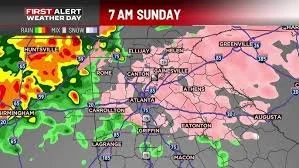
Reflection On Our Canceled Gathering

I am confident we were all disappointed not to gather yesterday. Winter weather cancellations are rare for us. However, after considering the warnings and guidance issued by local authorities and the National Weather Service, our elder team believed that cancellation was the prudent course of action. In the end, we can be thankful the Lord spared our area the worst of the winter weather. As we express gratitude, let’s also pray for communities in Georgia and across the nation that were struck hard and who will be recovering for days to come.

As I was home with my family yesterday, the absence of gathering was a stark reminder to me that there truly is no substitute for gathering with the church. I missed being with you, shaking hands, and hugging necks. I missed singing as a congregation (we had some GREAT songs planned!). I missed preaching the message I had prepared about who should be baptized. I hope the same is true for you: “absence makes the heart grow fonder.”

Though Tricia and I enjoyed a pleasant time of family worship together yesterday as we continued our reading of Acts, we were decidedly not the assembled church. Family worship is wonderful and important, but it is not the gathered body of Christ. Not even close. Moreover, no pre-recorded video, livestream, or other online “substitute” comes remotely close to the experience of gathering in-person with my church family. So, while we were disappointed not to gather yesterday, I pray the Lord will use this cancellation in your heart as he has mine. May he strengthen our appreciation and resolve to gather with the church. There really is no substitute.